Construction
Construction is the fourth–largest industry in Canada, employing over 1.2 million workers.
It has the third–highest number of incidents resulting in lost–time claims, mostly related to falls, heavy machinery operations, and equipment accidents.
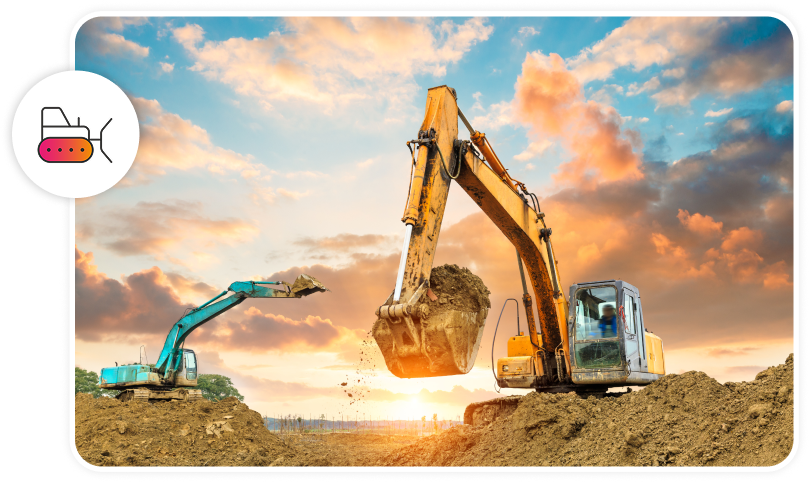
Common Construction Hazards

Falls:
Injuries resulting from falling from heights or due to insufficient fall protection measures.

Electrical Hazards
Dangers from exposed wiring and faulty equipment that can cause electrocution or burns.

Struck by material, equipment, or vehicles:
Incidents involving workers being hit by construction materials, equipment, or vehicles.

Heavy machinery:
Hazards related to the operation of heavy equipment, including risks of crushing or collisions.

Hazardous materials:
Exposure to dangerous substances like asbestos, lead, silica, volatile organic compounds (VOCs), solvents, and other materials, which can lead to serious health conditions.

Confined spaces:
Risks encountered in enclosed or limited–entry areas, such as trenches, which can lead to suffocation or collapses.

Noise:
The risk of hearing loss or damage due to extended exposure to high noise levels on construction sites.
Statistics and Facts
 Workplace fatalities
Construction has one of the highest rates of workplace fatalities, and the “fatal four” causes (falls, struck by equipment, caught between objects, and electrocutions) accounted for 65% of deaths in 2020.
 40,000 injuries annually
Over 40,000 workers are injured annually due to falls, often from heights or due to inadequate fall protection.
 2.5% safer
According to the WSIB, construction is 2.5% safer in 2023 than it was in 2022, due to improvements in compliance with the OHSA and its regulations, as well as in return-to-work support and reduction in physical and mental injuries.
 28,000 claims
There have been 28,000 claims with work time loss and 183 fatalities in this industry in 2022.

Discover how Citation Canada can support construction clients
Preventive Measures
When implementing preventive measures, employers should adhere to the hierarchy of controls to ensure the workplace is kept as safe as possible. If hazards cannot be eliminated or replaced, engineering controls should be used to protect workers. If engineering controls are not reasonable, administrative controls like training, improved safety procedures, risk assessments, and effective systems for reporting incidents should be implemented. Personal protective equipment is the lowest-order control in the hierarchy and should almost always be paired with a higher–order control to best protect workers.

Engineering Controls
Engineering controls include installing guardrails and barriers to prevent falls from heights, as well as ventilation systems to mitigate the risks associated with hazardous materials and poor air quality.

Training and Education
Training programs should cover fundamental safety principles, emergency procedures, and hazard recognition. Toolbox talks are also a good practice to help strengthen a safety-first culture.
Safe Operating Procedures
Safe operating procedures (SOPs) provide detailed, documented instructions that guide workers in executing their duties while minimizing risks, ensuring that every worker is aware of the correct methods for completing tasks safely.

Risk Assessments
Risk assessments enable the implementation of effective control measures tailored to mitigate dangers at a construction site, minimizing exposure to harmful conditions and significantly reducing the likelihood of accidents happening in the workplace.

Incident Reporting
Incident reporting is vital in the construction industry, playing a key role in improving workplace safety. Reporting helps companies identify patterns and underlying causes, which aids with developing strategies to prevent future accidents.
Personal Protective Equipment (PPE)
Personal protective equipment (PPE) like helmets, gloves, safety goggles, respirators, and harnesses provides essential protection against injuries from falls, electrical hazards, and hazardous materials.
Speak to an expert today!
Whatever your Health & Safety challenges, Citation Canada has the tools to help you succeed. From expert advice and mandatory training to risk assessment capabilities, incident reporting tools, and much more, we offer advanced resources to help you take safety at your company to the next level.