Healthcare
Healthcare is the biggest industry by the number of jobs in Canada with over 2,4 million workers.
It also has the largest number of registered claims resulting in work time loss due to workplace incidents, mostly due to biological hazards.

Common Healthcare Hazards

Biological Hazards
Exposure to infectious diseases like COVID-19, which significantly impacted long-term care facilities.

Chemical Hazards
Use of hazardous drugs and chemicals in healthcare settings.

Ergonomic Hazards
High rates of musculoskeletal injuries due to patient handling.

Slips, trips and falls
Accidents resulting from wet floors, cluttered walkways, distractions, or insufficient lighting that can lead to injuries

Psychosocial Hazards
Stress, burnout, violence, and harassment are common examples of psychosocial hazards.
Statistics and Facts
Lorem ipsum dolor sit amet, consectetur adipiscing elit, sed do eiusmod tempor incididunt ut labore et dolore magna aliqua.
 Workplace injuries
Healthcare workers in Canada face high rates of injury and illness, and it ranks as the top industry for workplace injuries in Québec
 Staffing challenges
There was a 17% increase in sick time and 50% in overtime among healthcare workers in 2021-2022
 5.2% negative trend
According to WSIB, the Healthcare industry shows a 5.2% negative trend on the safety index, a reflection of the increased volume of workplace injuries and mental health issues, mainly connected to the pandemic.
 127,000 claims
There have been over 127,000 accepted claims with lost worktime in 2022 in this industry, with 17 fatalities.

Discover how Citation Canada can support healthcare clients
Preventive Measures
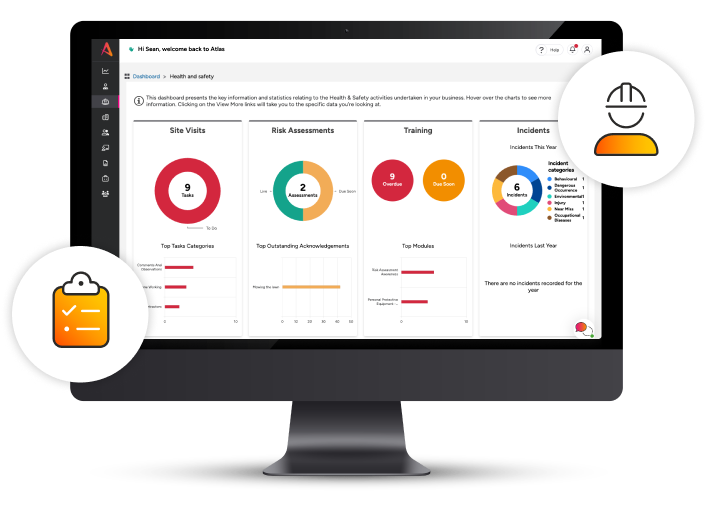
When implementing preventive measures, employers should adhere to the hierarchy of controls to ensure the workplace is kept as safe as possible. If hazards cannot be eliminated or replaced, engineering controls should be used to protect workers. If engineering controls are not reasonable, administrative controls like training, improved safety procedures, risk assessments, and effective systems for reporting incidents should be implemented. Personal protective equipment is the lowest–order control in the hierarchy and should almost always be paired with a higher–order control to best protect workers.
personal protective equipment (PPE)
Personal protective equipment (PPE) like masks, gloves, gowns, and face shields creates a barrier between healthcare workers and infectious agents. This equipment is essential for preventing the transmission of diseases like COVID-19, tuberculosis, and influenza.

Proper Handling Training
Handling hazardous chemicals, such as disinfectants and drugs, requires strict adherence to protocols and training. This includes correctly labelling chemicals, using appropriate person protective equipment, and following proper disposal guidelines of these materials.
Ergonomic Training for Safe Patient Handling
Training healthcare workers in ergonomic safety procedures reduces the risk of workplace accidents and injuries. Such training includes using mechanical aids like hoists and lifts, encouraging proper posture, and teaching lifting techniques that minimize strain.

Mental Health Support
Providing mental health resources, such as counselling services and stress management programs, helps address the psychological impact of working in high-stress environments.
Speak to an expert today!
Whatever your Health & Safety challenges, Citation Canada has the tools to help you succeed. From expert advice and mandatory training to risk assessment capabilities, incident reporting tools, and much more, we offer advanced resources to help you take safety at your company to the next level.