Manufacturing
Manufacturing is the third–biggest industry in Canada, employing over 1.6 million workers across the country.
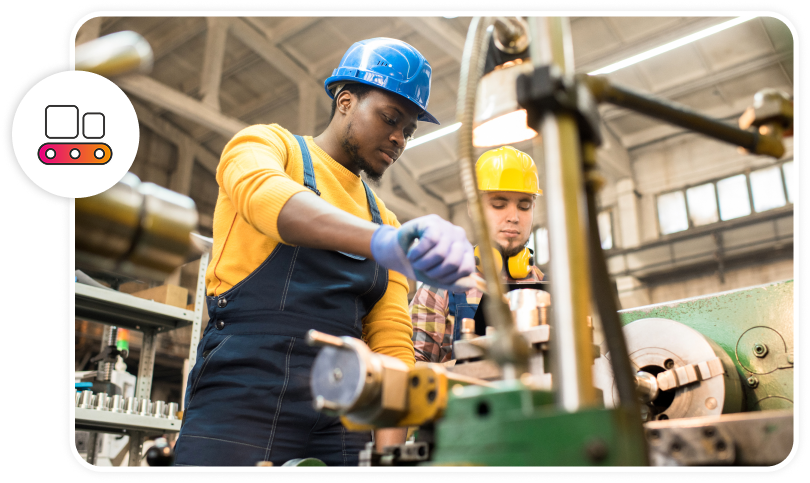
It has the second-highest number of work-related incidents that led to accepted claims for lost work time. Most of these events were related to machine and heavy equipment operations and falls.
Common Manufacturing Hazards

Slips, trips, and falls:
Accidents resulting from wet floors, cluttered walkways, or insufficient lighting that can lead to injuries.

Machine hazards:
Potential dangers like entanglement, crushing, or amputation associated with operating machinery.

Chemical hazards:
Risks posed by exposure to toxic, flammable, or corrosive chemicals that can harm health.

Fire hazards:
Threats from flammable substances and faulty electrical equipment that can lead to fires and explosions.

Noise hazards:
Health risks from prolonged exposure to high noise levels that can cause hearing impairment.

Ergonomic hazards:
Injuries resulting from repetitive movements or awkward postures causing strain and musculoskeletal disorders.

Electrical hazards:
Risks of electric shock, burns, or fires stemming from malfunctioning or improperly handled electrical equipment.
Statistics and Facts
 35,000 claims
Over 35,000 accepted claims with loss of work time in 2022, and 137 registered fatalities.
 Less sector security
This sector is 2.2% less secure than it was in 2022, due to an increase in mental stress, serious injuries, and fatalities.

Discover how Citation Canada can support construction clients
Preventive Measures
When implementing preventive measures, employers should adhere to the hierarchy of controls to ensure the workplace is kept as safe as possible. If hazards cannot be eliminated or replaced, engineering controls should be used to protect workers. If engineering controls are not reasonable, administrative controls like training, improved safety procedures, risk assessments, and effective systems for reporting incidents should be implemented. Personal protective equipment is the lowest–order control in the hierarchy and should almost always be paired with a higher–order control to best protect workers.

Engineering Controls
Engineering controls include installing guardrails and barriers to prevent falls from heights, as well as ventilation systems to mitigate the risks associated with hazardous materials and poor air quality.
Safe Operating Procedures
Safe operating procedures (SOPs) provide detailed instructions that guide workers in executing their duties while minimizing risks. These procedures standardize best practices, ensuring that every worker is aware of the correct methods for completing tasks safely.

Risk Assessment
Risk assessments allow for the creation and implementation of targeted control measures to reduce workplace and operational risks. Conducting thorough risk assessments helps manufacturing companies stay compliant with safety legislation.

Training and Education
Safety training offers workers curated, professional-grade content that covers the latest safety protocols, best practices, and emergency procedures. Along with training, adding informal coaching and short toolbox or pre-shift safety talks helps cultivate a safety-first culture in the workplace.
Personal Protective Equipment (PPE)
Personal protective equipment (PPE) like gloves, goggles, and ear protection is essential for protecting workers from exposure to risks like chemical spills, loud noises, and flying debris. It’s vital that all workers not only have access to the appropriate PPE but are also trained in its proper use and maintenance.
Speak to an expert today!
Whatever your Health & Safety challenges, Citation Canada has the tools to help you succeed. From expert advice and mandatory training to risk assessment capabilities, incident reporting tools, and much more, we offer advanced resources to help you take safety at your company to the next level.